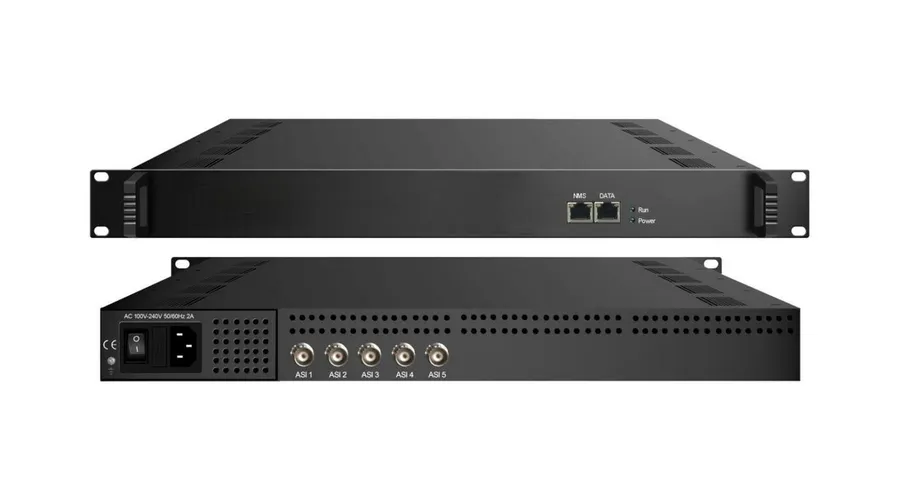
FUQ3515 ASI TS Switcher 3 ASI Inputs 2 ASI Outputs 188 TS Packet Format BNC
The Hanxing FUQ3515 is a headend device in the FUQ3 line, built in our Guangzhou headend factory. Published specifications: General: Power Supply 110VAC±10%, 50/60Hz; 220VAC±10%, 50/60Hz; General: Consumption 15W; General: Temperature 0~45℃ (work), -20~80℃. 3 parameters are published on this page from the model's own datasheet; quotations are factory-direct.
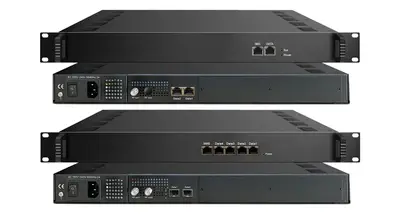
Built for transport stream redundancy, the FUQ-3515 ASI TS switcher carries 1 main plus 2 backup ASI inputs and 2 independent ASI outputs. Automatic failback switching follows TS packet integrity monitoring of bitrate, sync and continuity. A 1RU rack-mount chassis runs web-based control and firmware upgrades; buyers deploy it for broadcast headend redundancy and cable TV signal backup.
The full specification table for the FUQ3515 is in the datasheet we publish — tell us what you need and we will confirm it against the unit we build.
Send the channel count, input format and output standard — we reply with a model confirmation and factory-direct pricing.
Technical specifications
Taken from the datasheet we publish for the FUQ3515. Every value below comes from our own specification document — ask us if you need a parameter that is not listed.
| General: Power Supply | 110VAC±10%, 50/60Hz; 220VAC±10%, 50/60Hz |
|---|---|
| General: Consumption | 15W |
| General: Temperature | 0~45℃ (work), -20~80℃ |
FUQ3515 datasheet
Our full FUQ3515 datasheet (Word .docx, editable) — interfaces, formats, dimensions and power.
FUQ3515 — quick answers
Direct answers about the Hanxing FUQ3515: what it is, what it is typically used for, and the parameters we publish for it. Nothing here is estimated — where a value is not published, the answer says so rather than guessing.
What is the Hanxing FUQ3515?
Built for transport stream redundancy, the FUQ-3515 ASI TS switcher carries 1 main plus 2 backup ASI inputs and 2 independent ASI outputs.
What is the FUQ3515 used for alongside an encoder or modulator line?
Supporting headend hardware — capture, processing, analysis and interfacing devices used alongside the encoder and modulator line.
What is the price of the FUQ3515, and how do I get a quote?
Hanxing builds this headend equipment in our own factory in Guangzhou, and it is offered for sale factory-direct. Send the channel count, the input format and the output standard you need, and we reply with the price, lead time and shipping options.
What power supply does the FUQ3515 need?
General: Consumption: 15W
Is the FUQ3515 datasheet available?
Yes — the datasheet we publish for the FUQ3515 is on this page and can be opened or downloaded directly.
Typical use
Supporting headend hardware — capture, processing, analysis and interfacing devices used alongside the encoder and modulator line.
- Cable TV
- OTT & streaming
- Broadcast headends
- Monitoring & test
More from this range
All Other Devices models


Next stage in the chain
Processing units in this range clean up, re-clock or re-package a signal before it is distributed. The output still needs a carrier to reach coax networks, so the modulator stage is the usual next step once the processing chain is defined.
Get a quote for the FUQ3515
Tell us the quantity, the input sources and the output standard you distribute. We confirm the configuration against the unit we build and come back with pricing, lead time and shipping options.