From the satellite feed to the screen or the antenna
We build headend and transmission chains from our own 190-model line — encoders and encoder-modulators, modulators and transmodulators, IP gateways, multiplexers, EPG and IPTV server software, DVB-T and FM transmitters. Send the channel plan and the output standard; we come back with the model list.
Hanxing builds headend and transmission chains from its own 190-model line in Guangzhou: encoders and encoder-modulators, modulators and transmodulators, IP gateways, multiplexers, EPG and IPTV server software, DVB-T and FM transmitters. Send the channel plan and the output standard and we answer with the model list and factory-direct pricing.
Every solution on this page is assembled from the same chain. We build the boxes in the middle — encode, multiplex, modulate, hand off to IP or to the transmitter — and the boxes either side are whatever the site already has.
Solution 01
Digital headend
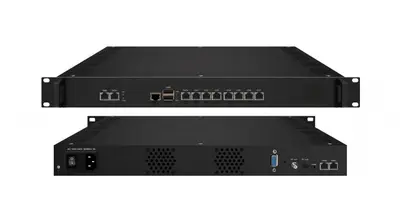
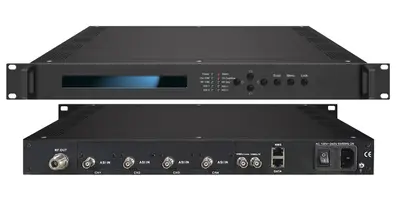
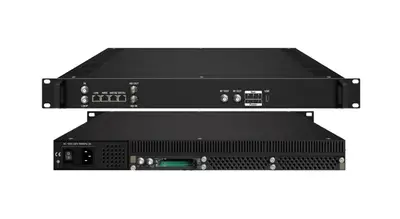
Everything that turns program sources into a transport stream: HDMI/SDI and IP inputs in, IP, ASI or a coax RF channel out. Sized by channel count and by the standard your market distributes in.
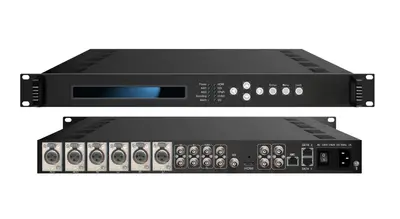
H.265, H.264 and MPEG-2 encoding over HDMI, SDI, CVBS or IP inputs
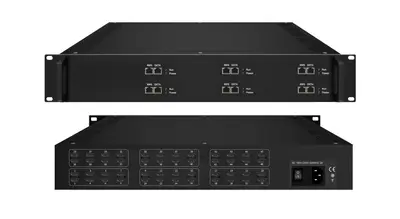
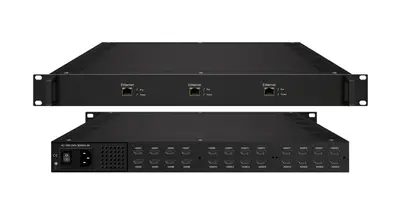
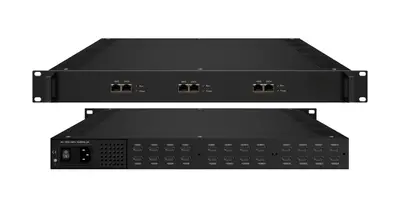
Dense chassis: up to 48 HDMI inputs in one 2-U encoder
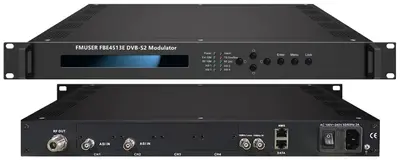
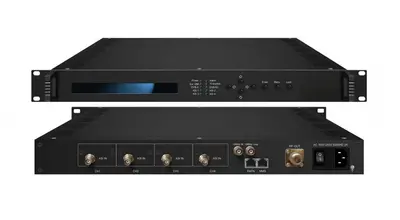
Encoder-modulators that put the RF channel straight on the coax
Multiplexing, PSI/SI, EPG and scrambling handled in the same chain
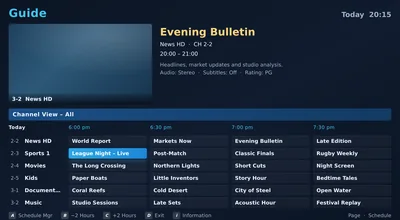
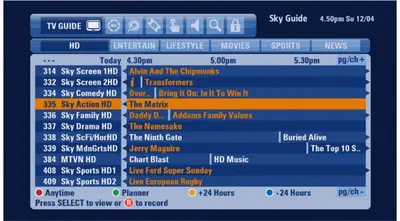
The middleware, the EPG server and subscriber management sit on the gateway side of this path.
Solution 03
Satellite and RF turn-around
Take a satellite or IF feed down to the cable, terrestrial or IP network your subscribers are actually connected to — with the tuner count and output standard you need.
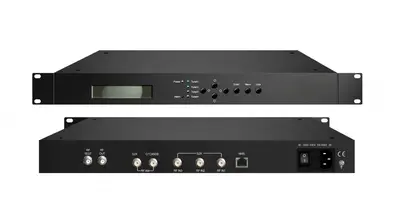
DVB-S/S2/S2X tuners to DVB-C, DVB-T, ISDB-T or ATSC output
IF modulators for uplink and contribution chains, 950-2150 MHz
Satellite modems with an Ethernet/IP output (FUQ-4515)
For uplink and contribution chains we build the IF side as well, 950-2150 MHz.
Solution 04
Terrestrial and FM transmission
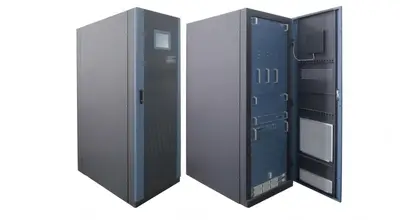
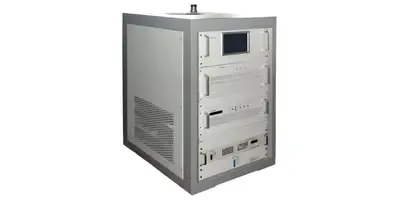
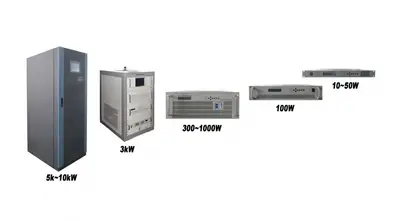
The transmitter end of the chain: DVB-T coverage for a regional network and FM stereo broadcast, from 10 W community stations to 10 kW regional services.
DVB-T transmitters from 10 W to 1.2 kW, adjustable output
FM stereo broadcast transmitters 10 W to 10 kW
Single-channel and multi-channel rack configurations
Headend processors and stream monitoring for the input side
Tell us the coverage area and the receivers you expect and we size the transmitter with you.
System solutions
Five complete chains, stage by stage
A system is the four or five boxes between the source and the screen, and this section lists them in order for each distribution standard: DVB-C cable, DVB-T and DVB-T2 terrestrial, DVB-S/S2 satellite, MMDS, and the IPTV platform behind a hotel or hospital network. Each table names the models we build for every stage, with the parameters the model datasheet publishes.
DVB-C
DVB-C cable headend
A DVB-C system turns analogue or SDI/CVBS sources into QAM carriers on the cable network. Hanxing encodes the sources, multiplexes them with tuner and ASI feeds, then scrambles and modulates: CVBS or SDI in, J.83A/B/C QAM out over coax.
DVB-C cable headend: the stages of the chain and the models that fill them
Mux, scrambler and modulator in one 1U; up to 112 DVB-C QAM carriers; 512 IP per card over SFP+/GE; EN 300 429 / ITU-T J.83A/B/C; ETR289 / ETSI 101 197 scrambling; -20 to +10 dBm
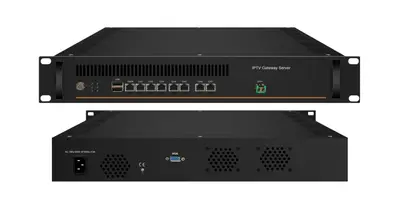
Where the cable operator already runs IP to the hub, the same line-up is delivered as IP and the QAM stage moves to the hub: an IP gateway such as the FUQ-4618Px hands the streams over instead.
A terrestrial chain takes IP or tuner feeds, transcodes them to the codec the market needs, multiplexes and scrambles the line-up, then modulates and transmits. Hanxing builds it from transcoder to antenna, 10 W to 1.2 kW.
DVB-T and DVB-T2 terrestrial chain: the stages of the chain and the models that fill them
10/20/30/50/100 W indoor; 200-600 W; 800-1200 W; 470-806 MHz; MER 35-36 dB
DVB-T2 output, the SFN timing reference you need (10 MHz / 1 PPS class) and the carrier count are confirmed per project against the modulator datasheet — tell us the standard and the coverage you are planning and we answer with the exact model and configuration.
A DVB-S/S2 chain builds one satellite line-up from baseband, tuner and IP sources, and puts it on an RF carrier with BISS protection. Hanxing covers encoding, transcoding, multiplexing with scrambling, and the S/S2/S2X modulator.
DVB-S and DVB-S2 satellite chain: the stages of the chain and the models that fill them
An MMDS chain distributes a line-up over microwave to subscribers. Hanxing encodes the sources, multiplexes and scrambles them, and puts them on a QPSK carrier with the transmit stage specified for your band and power.
MMDS distribution chain: the stages of the chain and the models that fill them
4 ASI inputs and 128 IP inputs to 4 MPTS outputs; ETR289 / ETSI 101 197 / ETSI 103 197 scrambling; PSI/SI auto-generation, PID re-mapping, PCR adjusting
1 ASI input to RF output; energy diffusion, RS coding, convolution interleaving, pre-modulated baseband shaping; output -10.0 to -41.5 dBm in 0.5 dB steps; web NMS
Up-conversion and transmit
Specified per project
MMDS works above 2 GHz; the transmitters we publish cover 470-806 MHz (FUQ-8351 10-100 W, FUQ-8322 200-600 W). Send the band and the output power and we confirm the transmit stage against the datasheet it will ship with
The microwave transmit stage is the one part of this chain we do not re-badge: it is specified per project, and we will tell you plainly when a model outside our own line is the right answer.
An IPTV platform for rooms encodes the satellite and local feeds, hands them to an IPTV gateway, adds the EPG and the middleware layer, and delivers them over the building network to smart TVs and set-top boxes.
Hotel and hospital IPTV platform: the stages of the chain and the models that fill them
DVB-compliant EPG system; 2044 transport streams; ASI and IP output
Guest screens
Smart TV or STB of your choice
The platform serves the screens the property already buys; there is no set-top box in the catalogue and we do not pretend otherwise
Subscriber management, advertising insertion and the welcome-page layer are server-side options on the same platform — they are quoted with the platform, not as separate hardware.
190 models, grouped the way a headend is ordered rather than the way a price list is printed. The counts below are read from the catalogue at build time, so they always match the model pages they link to.
Tell us the input sources, the outlet standard and the number of programs. We map it onto the catalogue, confirm the configuration against the datasheets and send pricing, lead time and shipping options.
Send the model number — or the channel count and the input/output formats — and we answer with the datasheet, the configuration and a written quotation.