Hotel IPTV Systems: Set-Top Box vs Smart TV App
Should your hotel install set-top boxes in every room or rely on Smart TV apps? Compare cost, reliability and guest experience for each approach. Each model named in this article is one of 190 in the Hanxing catalogue, published with its own specifications and datasheet.
Hanxing Team
Broadcast & IPTV Experts
The Big Hotel IPTV Decision
When upgrading in-room TV, the first question is hardware: set-top boxes (STBs) in every room, or apps on Smart TVs? Both work. They have different economics. Both routes hang off the same hotel IPTV headend, so the decision is about the last metre; the hotel TV system guide covers the chain behind it and the IPTV and hospitality solutions page lists the headend equipment either way.
Set-Top Boxes (STB): The Traditional Route
How It Works
Each room gets a small box (Android STB or dedicated IPTV box) connected to the TV via HDMI. The box runs the hotel IPTV app and middleware client.
Pros
- ✅ Works on any TV — even 10-year-old panels without smart features
- ✅ Uniform experience — same interface in every room
- ✅ Reliable performance — dedicated hardware, no TV brand quirks
- ✅ Easy management — remotely update all boxes centrally
- ✅ Advanced features — casting, games, hotel services apps run smoothly
Cons
- ❌ Upfront cost — 50 rooms × $30–50 per box
- ❌ More points of failure — boxes can be unplugged, damaged
- ❌ Power consumption — every box draws power 24/7

Smart TV Apps: The Modern Approach
How It Works
The hotel IPTV app is installed directly on each room's Smart TV (Android TV, Samsung Tizen, LG webOS). No extra hardware.
Pros
- ✅ Zero hardware cost per room
- ✅ Cleaner installation — no boxes, no HDMI cables
- ✅ Lower power draw
- ✅ Guests familiar with the TV brand UI
Cons
- ❌ Depends on TV model — performance varies between brands and years
- ❌ Older Smart TVs may lack the processing power for smooth 4K IPTV
- ❌ App maintenance — different TV platforms need separate app versions
- ❌ HDMI input issues — guests plugging in their own devices can cause conflicts
- ❌ If the TV dies, the "brain" dies with it — replacement TV needs re-setup
Cost Comparison (100-Room Hotel)
| Item | STB approach | Smart TV app |
|---|---|---|
| Hardware (100 rooms) | $3,000–5,000 | $0 |
| Installation | $1,000–2,000 | $500 |
| App/license per room/year | $5–15 | $5–15 |
| Maintenance | Moderate | Low-moderate |
| First-year total | ~$6,000–9,000 | ~$1,500–3,000 |
| TV upgrade needed? | No | Yes (if old) |
*If the hotel is buying new Smart TVs anyway, the app route is clearly cheaper. If TVs are older, STBs are often the pragmatic choice.*
What the Experts Recommend
Choose STBs when:
- Rooms have older or non-smart TVs
- You need a consistent premium experience
- You want advanced features (casting, games, hotel services)
- You manage 50+ rooms and value central control
Choose Smart TV apps when:
- You are installing new Smart TVs anyway
- Budget is tight and rooms are basic
- Your guest profile is simple (streaming, not hotel services)
- You have reliable in-room Wi-Fi
Hybrid approach: STBs in suites/premium rooms, apps in standard rooms — many hotels do exactly this.
The same decision is made on different terms where the screens are managed rather than sold: the hospital IPTV system guide and the campus IPTV system guide work through the room side of those sites.
Features That Matter Either Way
- 🔒 Guest privacy — auto-logout between stays
- 🌍 Multi-language UI
- 🎬 VOD with pay-per-view options
- 🛎️ Hotel services integration (room service, checkout)
- 📊 Central dashboard — channel changes propagate instantly
Bottom line: if you are buying new TVs, apps are the smart economic choice. If you are working with existing TVs or want a premium uniform experience, set-top boxes are worth the cost. Match the approach to your TV fleet — not to fashion.
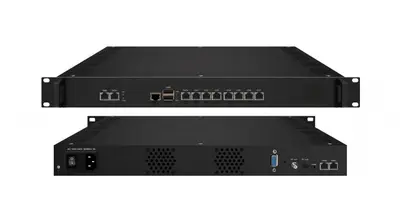
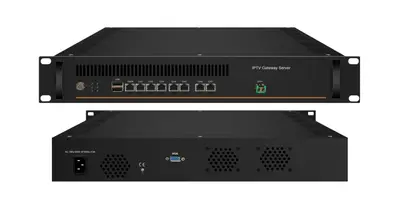
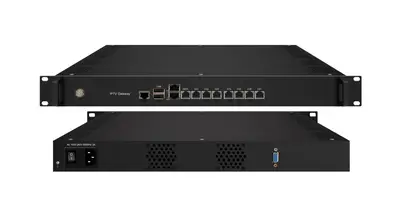
Either route hangs off the same headend, and the chassis that feed it are grouped on the IP gateway range and the IRD and decoder range.
Frequently Asked Questions
Should a hotel use set-top boxes or Smart TV apps?
It depends on the television fleet, not on fashion. Set-top boxes win where the rooms have older or non-smart panels and the property wants one identical interface in every room; Smart TV apps win where the televisions are being renewed anyway and the service is simple. A hybrid - boxes in suites, apps in standard rooms - is common.
What drives the cost on each route?
The set-top box route carries a per-room hardware cost plus installation, and the app route carries no room hardware but a television replacement cost if the panels are old. On a 100-room property the crossover is usually the television refresh: if the property is buying Smart TVs regardless, the app route is the cheaper one.
Can both routes run on the same headend?
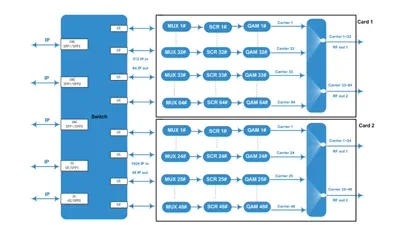
Yes. Both hang off the same hotel IPTV headend, so the decision only changes the last metre in the room. The headend, the channel line-up, the EPG and the middleware stay the same, and the hospitality solutions page lists the equipment either way.
What about public areas and back-of-house screens?
Lobby screens, meeting rooms, staff areas and signage are usually driven by an IP decoder or an IRD rather than a full in-room set-top box, because those screens show one feed each and need no guest interface. The IRD and decoder range covers that leg of the system.
Do Smart TV apps need more bandwidth than set-top boxes?
No. The bandwidth per stream is set by the video bit rate and the codec, not by the client device, and multicast sends one copy of each channel down the network whatever the room watches it on. What differs is the number of device generations you have to support, which is an operations cost rather than a network cost.
Video guides on this topic
All guidesWhich of these building blocks do I actually need, and what does each one cost?
Price follows your channel count and the inputs you have - there is no list price, so send both and we quote each model with its datasheet.
Ask for the model list and a quoteWhat do managed set-top boxes cost per screen compared with an app?
Price follows your channel count and the inputs you have - there is no list price, so send both and we quote each model with its datasheet.
Ask for the model list and a quotePrevious
IPTV Headend Equipment: Encoders, Gateways, STBs
Next
How to Build a Small FM Radio Station (Budget Guide)
Talk to the headend engineers before you specify
Send the model number you are looking at — or the channel count and the input and output formats you work with — and we answer with the datasheet, the configuration and a written price. The reply comes from the headend team in Guangzhou, not a sales line.