DVB to IP Gateway Guide: Tuner, ASI and SPTS/MPTS
How a DVB to IP gateway turns satellite, terrestrial and cable carriers into IPTV: tuner and ASI inputs, SPTS or MPTS output, BISS, and published specs. Each model named in this article is one of 190 in the Hanxing catalogue, published with its own specifications and datasheet.
Hanxing Team
Broadcast & IPTV Experts
The path this guide walks
- Satellite / aerial / cable feedthe carriers the site already has
- Tuner or ASI inputDVB-S/S2, DVB-T/T2, DVB-C or ASI
- DVB to IP gatewaySPTS or MPTS over UDP / RTP
- Building networkaccess switches with IGMP
- Distributionline-up, EPG and client sessions
- ScreensSTB or smart TV app
The gateway converts the carrier; the video format itself is passed through unchanged.
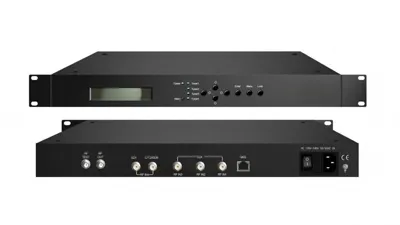
An IPTV line-up rarely starts from nothing. It usually starts from a dish on the roof, a terrestrial antenna, a cable feed, or an older coax headend in the basement — and the first job of the IP leg is to get those carriers onto the network. A DVB to IP gateway does that job: it demodulates the incoming digital TV carriers and republishes the services they carry as transport streams over Ethernet.
Every figure in this guide is printed on the product page of the model it belongs to. Where a model does not publish a value, this article says so and sends you to its datasheet rather than estimating it, because the carrier count, the input standard and the output mode are the three things a gateway is bought for, and a guessed number is worse than a missing one.
What Is a DVB to IP Gateway?
A DVB to IP gateway demodulates one or more digital TV carriers and republishes the services they carry as transport streams over IP, normally as UDP or RTP multicast. It demodulates and de-multiplexes rather than re-encodes, so the video and audio format on the IP output is the format that arrived on the RF input.
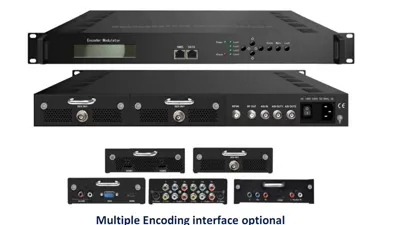
The name covers a family rather than one box. The IP gateway range spans 20 models, and they differ first by what they read on the input side and second by what they publish on the output side.
| Function | Published example |
|---|---|
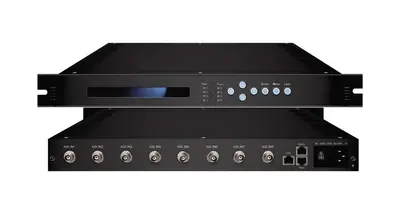
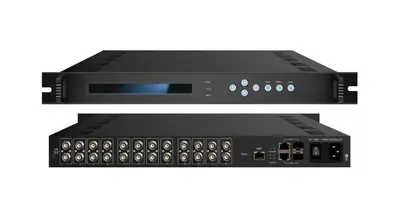
| Tuner to IP, multi-standard | FUQ4619C — 24 RF tuner inputs, DVB-T/T2/C/S/S2 reception, UDP/RTP output |
| Tuner to IP, multi-mode tuners | FUQ46610F — multi-mode tuners switchable across 60~890MHz, 6/7/8 M bandwidth |
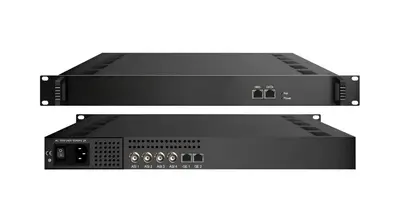
| ASI to IP | FUQ4619B-2 — 8 ASI inputs, maximum total bit-rate 400Mbps for 256 SPTS outputs |
| IP to ASI | FUQ4618RY — 12-channel IP input, DVB-ASI output, UDP |
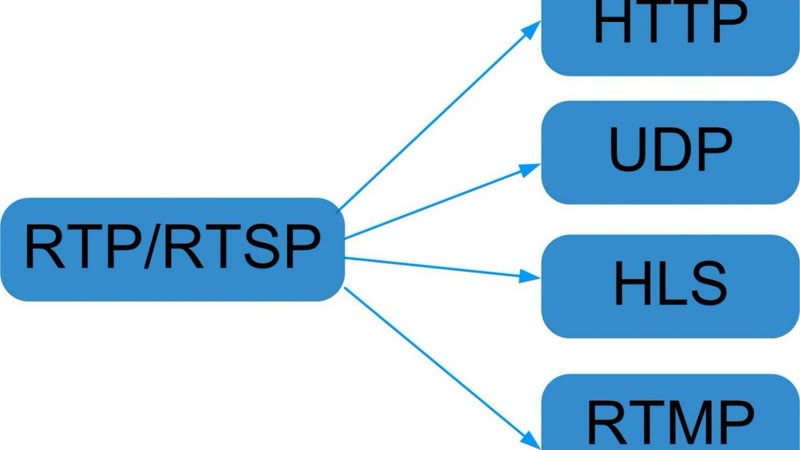
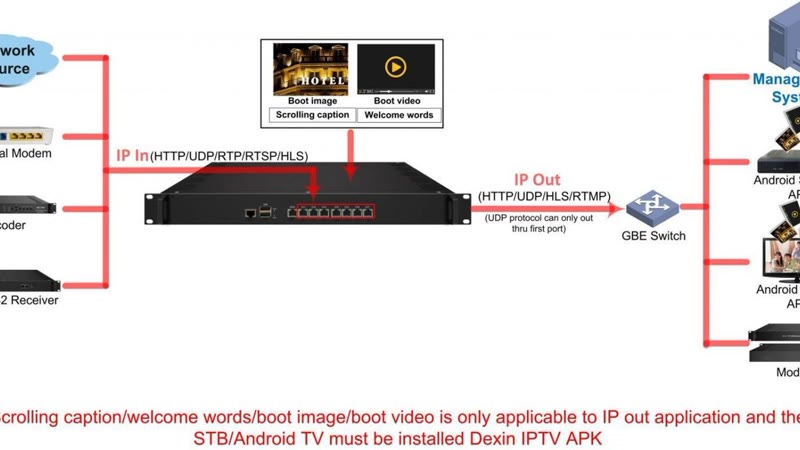
| IP headend gateway and server | FUQ4619X — 8 data ports, SRT/HTTP/UDP/RTP/RTSP/HLS/RTMP, 600 users |
Which Inputs Does a DVB to IP Gateway Have to Read?
The input side decides the model. A satellite site needs DVB-S/S2/S2X tuners, a terrestrial site needs DVB-T/T2, a cable site needs DVB-C, and a site that is moving an existing ASI chain onto IP needs ASI inputs rather than tuners at all. The rows below are the input values our gateway pages publish.
| Model | Published row | Value |
|---|---|---|
| FUQ4619C-3 and FUQ4619C-6 | Input | 24 tuners inputs + 2 ASI inputs + 1 USB inputs |
| FUQ4619C-3 | DVB-S / DVB-S2 | 950~2150MHz |
| FUQ4619C-6 | DVB-C | J.83A(DVB-C), J.83B, J.83C |
| FUQ4619C-5 and FUQ46610F | Multi-mode tuners switchable (New Type) | 60~890MHz |
| FUQ4619C-5 | Multi-mode M tuners switchable (New Type) | 6/7/8 M bandwidth |
| FUQ4619C-4 and FUQ4619C-7 | DVB-S / DVB-S2 | 950~2150MHz |
| FUQ4619B-2 and FUQ4619B-4 | Transmission Bit-rate | Maximum total bit-rate is 400Mbps — 256 SPTS output |
| FUQ-10 IP gateway | ASI | 2 groups separate outputs (each group has 2 channels) |
| FUQ-10 IP gateway | Ethernet port | 10/100M/1000M self adaption |
Two habits keep this stage honest. Read the tuner type in the model name against the tuner rows on the page, because a page that publishes 950~2150MHz is describing a satellite tuner and not a terrestrial one. And treat a row that is missing as missing: if the input row you need is not printed on the page for the model you have chosen, that value has to come from the datasheet for that exact model.
SPTS or MPTS: Which Output Mode Does the Site Need?
The output mode is a client-device decision. SPTS gives every service its own IP stream, so a set-top box joins exactly the group it needs; MPTS carries a group of services in one stream and suits a destination that expects a multiplex, such as another headend, an IRD or a monitoring position.
| Output question | What the published rows say |
|---|---|
| How many PIDs can be carried? | FUQ4619C: Max PIDs 512 per channel |
| How much SPTS can one ASI-to-IP unit publish? | FUQ4619B-2: maximum total bit-rate 400Mbps for 256 SPTS output |
| Can PIDs be remapped on the way through? | FUQ4619C: PID re-mapping published, and any PID transparent and mapping achievable |
| Which PID range is supported? | FUQ-10: output range 0x0000—0x1FFF, amount of output PID 180 |
| What if the line-up has to be regrouped? | FUQ4218B TS re-multiplexer: 8 ASI and 512 IP inputs, 4 ASI and IP outputs |
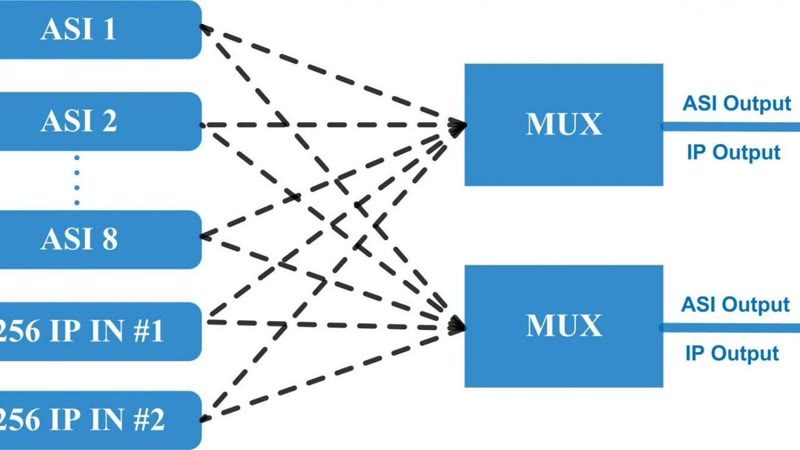
Not every model publishes a stream count or a PID budget. When the number decides the order, ask for the datasheet of the model in question rather than scaling a figure from a different gateway in the same family, because stream counts depend on the bit-rate of the services as much as on the chassis.
Tuner to IP, ASI to IP or IP to ASI: Which Converter Do I Need?
The three converter directions solve three different problems, and one headend can need two of them at the same time. Tuner-to-IP brings RF sources onto the network, ASI-to-IP moves a legacy contribution chain onto it, and IP-to-ASI goes back the other way when the next device in the chain only accepts an ASI input.
| Direction | The problem it solves | Published example |
|---|---|---|
| RF to IP | The dish, antenna or coax feed already exists and the screens are on the LAN | FUQ4619C: 24 RF tuner inputs, DVB-T/T2/C/S/S2 |
| ASI to IP | Contribution feeds arrive on BNC ASI and the headend is moving to IP | FUQ4619B-2: 8 ASI inputs, 256 SPTS output |
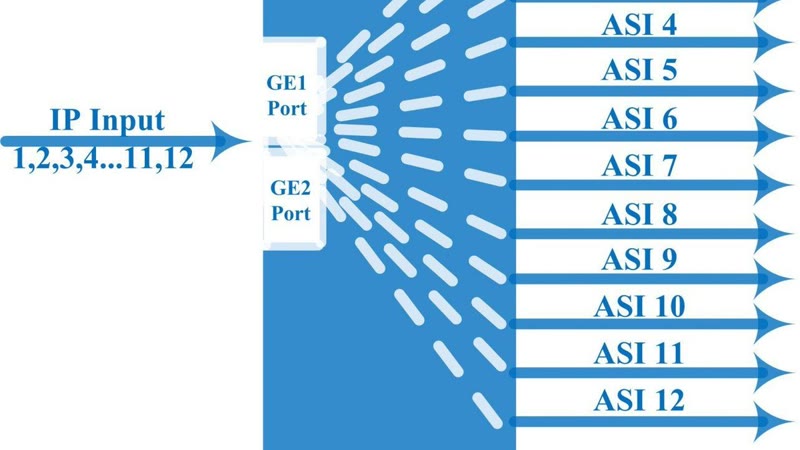
| IP to ASI | The downstream device — a legacy chain or an ASI-only modulator — has no IP input | FUQ4618RY and FUQ4618SY: 12-channel IP to DVB-ASI |
| IP to IP, line-up and services | The channel line-up, the EPG and the client sessions have to be served from one place | FUQ4619X: 8 data ports, SRT/HTTP/UDP/RTP/RTSP/HLS/RTMP, 600 users |
| Both directions in one chassis | A site that has to bridge an ASI rack and an IP rack | FUQ4218B: 8 ASI and 512 IP inputs with 4 ASI and IP outputs |
The last row is the one to look at when a site is being upgraded rather than replaced. A bidirectional gateway lets the old ASI equipment stay in service while the new IP distribution is built beside it, and the coax leg can be added from the same multiplex later — the route walked in our IP to QAM modulator guide.
Do You Need BISS Descrambling or a Full Conditional Access System?
Two different problems sit behind the word scrambling, and the gateway pages treat them differently. BISS is contribution-key descrambling and several of our gateway models publish it; a full conditional access system with smart cards, entitlement management and subscriber handling is a separate layer that sits behind a multiplexer-scrambler.
The published BISS rows come in two levels of detail, and the difference matters at the order stage.
| Model | Published BISS row |
|---|---|
| FUQ4619C-3 and FUQ4619C-6 | BISS descrambling: Mode 1, Mode E |
| FUQ4619C-5 and FUQ46610F | BISS descrambling: Mode 1, Mode E (up to 850Mbps), descrambles individual programs |
Where a commercial service has to be decrypted rather than a contribution feed, the work moves to the CA side of the headend. The FUQ3514 multiplexer scrambler publishes a Scramble Standard of ETR289, ETSI 101 197 and ETSI 103 197, and the FUQ4823C multiplexer scrambler conditions the line-up above it — 4 tuner inputs, 5 MPTS outputs over UDP/RTP. The commercial layer above them — smart cards, SMS, entitlements and billing — is covered in our conditional access and SMS guide.
How Many Tuner Inputs Does a Channel Line-Up Need?
Count carriers, not channels. One satellite transponder, cable carrier or terrestrial multiplex carries a group of services, so a single tuner input can feed several channels at once, and the number that decides the model is how many different carriers the site must receive simultaneously, plus the spare inputs wanted for later additions or redundancy.
The method we walk through with integrators is short enough to do on one page.
- List the carriers, not the channels: every frequency or transponder the site has to receive gets one line.
- Group the services you intend to carry by the carrier they arrive on. Services from the same carrier share one tuner input.
- Add the spare inputs. Channels get added after handover more often than they get removed, and a spare tuner input is cheaper than a second chassis.
- Check the PID budget for the busiest carrier: the FUQ4619C publishes a maximum of 512 PIDs per channel, which is the ceiling for what one tuner output can carry.
- Match the density to the rack. The published densities in this range run from 16 tuner inputs on the FUQ4619C-5 and FUQ46610F to the 24 tuner inputs published on the FUQ4619C-3 and FUQ4619C-6.
We publish no channels-per-tuner figure, because a figure like that depends entirely on the bit-rate of the services on the carrier. Send the carrier list and the services you intend to carry and we will work out the input count from the actual multiplexes rather than from an average.
Where the stream has already been compressed, the encode stage ahead of the gateway is covered in the IPTV encoder guide, and the rack the gateway is installed in is described in the IPTV headend equipment guide.
What Does a DVB to IP Gateway Not Do?
A gateway passes a stream through; it does not change it. Three limits come up in almost every enquiry we answer, and knowing them before the order avoids the classic mistake of buying a converter for a job that needs a transcoder.
- It does not re-encode video. MPEG-2 in stays MPEG-2 out. Where the clients decode a different format, a transcoder belongs in the chain — the FUQ4359 publishes trans-coding from 4x MPEG2 HD to 4x MPEG2/H.264 HD with CBR and VBR rate control, drawing 20W.
- It does not decrypt a commercial CA service. BISS is published, but smart-card conditional access needs the CAS side of the headend.
- It does not make the network multicast-ready by itself. The FUQ1000A platform page states it plainly: if the UDP protocol is adopted in live services, switches of the access layer should support IGMP. Without IGMP snooping the access switch floods every video group to every port, which is the most common reason a gateway that tests cleanly in the rack fails in the building.
- It does not register the services at the screen. Service names, channel numbers and the EPG source are configured in the downstream line-up, and they are the three things a viewer notices when they are wrong.
What Does the Network and Commissioning Kit Need?
Multicast live video is only as good as the switch it crosses, and a gateway that leaves the rack as a clean stream can still reach the screen as a broken one. The network and the test equipment belong in the same plan as the gateway rather than in a separate purchase order.
- Separate management and video traffic onto different VLANs or ranges, with fixed addresses for the headend units rather than DHCP leases that move.
- One multicast group per service, written down in the channel plan, with the switch's IGMP snooping confirmed rather than assumed.
- Check the stream at the gateway output before the network, so a fault is attributed to the right stage the first time. The FUQXB analyzer publishes 1x ASI and 1x RF (DVB-C) inputs, real-time TS analysis at 160 Mbps, automatic handling of 188/204-byte packets and offline capture up to 120 Mbps, which covers the stream checks and the carrier check beside them.
- Test from the far end. A client at the last access switch, not at the headend rack, is the only test that proves the multicast path.
The room-level version of that plan — rack order, cabling by stage, the settings to fix before testing and the checks to sign off — is in our headend installation checklist. Where the site is a hotel, a hospital or a campus, the same gateway stage sits inside the layouts described in the hotel headend guide and the hospital IPTV guide.
Which Gateway Should You Ask Us For?
Every unit is built in our own factory in Guangzhou, which has produced broadcast and headend equipment since 1994 on a 15,893 square metre site, and each unit is burned in for 72 hours before packing. Units ship to more than 200 countries, so a gateway is priced as a configuration rather than as a box.
An enquiry is answered fastest when it arrives as a site description instead of a model number. The list we work through is short.
- Sources: the standards to be received, and whether any of them are BISS scrambled.
- Line-up: the carriers and the services to be carried, with the services grouped by carrier.
- Output: SPTS or MPTS, and the IP protocol the building network already runs.
- Chain: what the streams feed next — set-top boxes, smart TVs, a second headend, a modulator or an ASI-only device.
- Site: rack space, power and whether the room is temperature-controlled, since the units in this range that publish a temperature row state an operating window of 0 to 45 degrees Celsius.
With those details we return the model list with a datasheet for each exact model, the rack layout the units were designed for, and a written factory-direct price. The FAQ answers the commercial questions, the solutions page shows the vertical layouts, and the contact page starts the enquiry. For the equipment that sits either side of the gateway, read the headend equipment guide.
Frequently Asked Questions
What does a DVB to IP gateway do?
It demodulates digital TV carriers and republishes the services inside them as MPEG transport streams over Ethernet, normally as UDP or RTP multicast. It converts the carrier to IP; it does not re-encode the video, so the format that arrives on the RF input is the format that leaves on the IP output. The FUQ4619C is our 24-tuner example: the page publishes 24 RF tuner inputs and DVB-T/T2/C/S/S2 reception.
What is the difference between a tuner to IP gateway, an ASI to IP gateway and an IP to ASI gateway?
The direction of conversion. A tuner to IP gateway reads RF carriers, an ASI to IP gateway takes transport streams arriving on BNC ASI inputs, and an IP to ASI gateway goes the other way for equipment that only accepts ASI. Our pages publish all three: the FUQ4619C-3 lists 24 tuner inputs plus 2 ASI inputs plus 1 USB input, the FUQ4619B-2 lists 8 ASI inputs with a maximum total bit-rate of 400 Mbps across 256 SPTS outputs, and the FUQ4618RY is a 12-channel IP to ASI gateway.
Should I choose SPTS or MPTS output?
SPTS if the destination is a set-top box or a smart TV that should join one service; MPTS if the destination is another headend, an IRD or a monitoring position that expects a multiplex. Which modes a model offers is written on its own page rather than assumed: the FUQ4619C publishes a maximum of 512 PIDs per channel, and the FUQ4619B-2 publishes a maximum total bit-rate of 400 Mbps for 256 SPTS outputs. Where a stream count is not published for a model, ask us for the datasheet for that model instead of taking a figure from a neighbouring one.
Does a DVB to IP gateway re-encode or transcode the video?
No. A gateway demodulates and de-multiplexes, so MPEG-2 stays MPEG-2 and H.264 stays H.264. If the format arriving on the RF side does not match what the client devices decode, a transcoder is needed in the chain; the FUQ4359 publishes trans-coding from 4x MPEG2 HD to 4x MPEG2/H.264 HD with CBR and VBR rate control.
Do these gateways descramble BISS-encrypted feeds?
Several models publish BISS descrambling, at two levels of detail. The FUQ4619C-3 and FUQ4619C-6 publish BISS descrambling Mode 1 and Mode E; the FUQ4619C-5 and the FUQ46610F publish Mode 1 and Mode E up to 850 Mbps with individual program descrambling. That is contribution-key descrambling. A commercial conditional access service with smart cards and entitlement management is a different layer, and the FUQ3514 multiplexer scrambler publishes the scrambling standards ETR289, ETSI 101 197 and ETSI 103 197 for that side of the headend.
How many tuner inputs does my channel line-up need?
Count carriers rather than channels. One satellite transponder or terrestrial multiplex carries a group of services, so a single tuner input can feed several channels at once, and the number that decides the model is how many different carriers the site has to receive simultaneously, plus the spare inputs wanted for later additions or redundancy. Our published densities run from 16 tuner inputs on the FUQ4619C-5 and FUQ46610F to the 24 tuner inputs published on the FUQ4619C-3 and FUQ4619C-6.
What do you need from me to quote a gateway?
The source standards to be received, the carriers and the services to be carried, the output mode wanted (SPTS or MPTS), the IP protocol in use on the building network, whether the feeds are BISS scrambled, and the rack space available. With those details we return the model list, the datasheet for each exact model and a factory-direct quotation. Where a model page does not publish a row your design depends on, ask for the datasheet rather than assuming a value.
Previous
Transport Stream Multiplexer Guide for Headends
Next
IPTV Headend Installation Checklist and Rack Layout
Talk to the headend engineers before you specify
Send the model number you are looking at — or the channel count and the input and output formats you work with — and we answer with the datasheet, the configuration and a written price. The reply comes from the headend team in Guangzhou, not a sales line.